
If you’ve been noticing pain on the pinky side of your wrist, particularly when gripping, twisting, or pushing through your hand, you may have injured a structure called the TFCC. That stands for Triangular Fibrocartilaginous Complex. The name is a mouthful, but its job is pretty straightforward.

The TFCC is a small structure made up of a fibrocartilaginous disc and ligaments sitting on the pinky side of your wrist. It acts as both a shock absorber and a stabiliser, supporting the small wrist bones and allowing you to rotate and load your wrist smoothly.
What Does a TFCC Injury Feel Like?
When the TFCC becomes irritated or torn, everyday tasks can suddenly become uncomfortable. Opening jars, turning doorknobs, using keys. You might notice your grip feels weaker on one side, or that your wrist clicks, catches, or feels slightly unstable. Some people find it painful to push themselves up from a chair or lean through their hands.
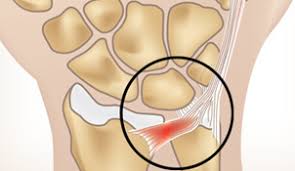

How Do TFCC Injuries Happen?
TFCC injuries generally happen in one of two ways.The first is a sudden (acute) injury. A fall onto an outstretched hand, a wrist fracture, or a sport like gymnastics that drives a lot of force through the wrist. The tissue gets overloaded quickly and can strain or tear.
The second type develops gradually. Repetitive wrist movements and ongoing strain can irritate the TFCC over time. This is common in cricket, tennis, pickleball and table tennis, where repeated gripping and twisting motions are part of the game. It also shows up in occupations that involve frequent manual work or weight-bearing through the hands.
Getting the Right Diagnosis
Here’s the good news: most TFCC injuries improve without surgery. A physio can assess your wrist and work out whether the pain is actually coming from the TFCC or from something else, such as a tendon irritation, ligament sprain, arthritis, or even a small fracture. Getting the correct diagnosis early makes a real difference to your recovery.
How We Treat TFCC Injuries
Treatment starts by settling the irritation down. That might mean temporarily using a splint to support the wrist and backing off the activities that aggravate it. This first step matters. The tissue needs time to calm down before you start loading it again.
Once the pain has settled, rehab begins. We work on gradually restoring movement, rebuilding strength, and improving wrist stability. Grip strength exercises and sport- or work-specific drills are introduced step by step so you can get back to your usual activities with confidence.

Don’t Wait on Wrist Pain
If you’re dealing with ongoing wrist pain, weakness, clicking, or a feeling of instability, get it looked at sooner rather than later. Early treatment makes a real difference to recovery time and can stop a small problem from turning into a bigger one.
Think You Might Have a TFCC Wrist Injury?
Call Us on 4728 2116
Written by: Nathan George (Physiotherapist at Physio On Ross, Townsville)


